

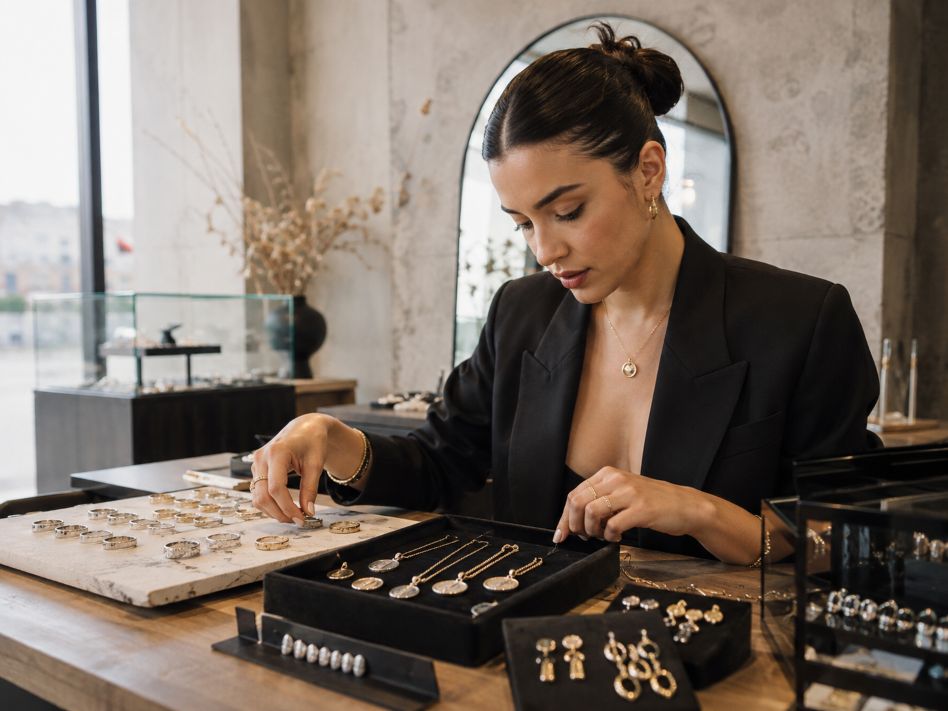
Jewelry has carried personal messages and signals of identity for centuries. The British Museum documents medieval rings engraved with romantic mottos, while the Victoria and Albert Museum holds portrait miniatures made to be worn in lockets. Personal meaning, then, is hardly a new feature of adornment.
What feels different today is the range of customization available to ordinary buyers. A category such as custom silver grillz shows how specific that process can become. Rhino Grillz says its genuine sterling silver pieces are made from a mold impression of the wearer’s teeth rather than relying on one standard shape.
Why Does Personalization Feel More Important Now?
Modern customization gives consumers more control over how an accessory looks and, in some cases, how it fits. Buyers may choose engravings, stones, finishes, sizes, shapes, or other design details. Digital ordering has also made many custom options easier to reach.
Research helps explain the appeal. A study published in Marketing Letters found that perceived uniqueness can add value to customized products beyond functional or aesthetic fit. Another study in Computers in Human Behavior found that distinctiveness can strengthen a consumer’s identification with a customized product.
Jewelry is especially suited to self-expression because it is visible and worn close to the body. A customized piece can feel less like a generic accessory and more like an extension of personal taste or image.
Personal Jewelry Existed Long Before Social Media
The counterpoint matters. Customized jewelry did not suddenly appear with online shopping. Historical collections show that people have long engraved names, messages, symbols, and initials onto personal objects.
The British Museum has a late Roman bracelet carrying a good-luck inscription for a woman named Juliana, as well as rings with personal mottos and initials. The Victoria and Albert Museum notes that nineteenth-century lockets could include a couple’s initials, while portrait lockets had been worn centuries earlier.
The motive is familiar. People have long used objects to connect with relationships, memory, status, or identity. What has changed is visibility. A personalized piece once seen by a small circle can now appear in photographs and videos distributed to huge audiences.
What Changes When the Jewelry Is Made From Your Own Fit?
Dental jewelry provides a clear example because personalization can involve anatomy as well as design. Rhino Grillz explains that customers ordering genuine sterling silver pieces use a molding kit, make an impression, and return it so the final piece can be shaped for their teeth.
The company’s custom range also shows how appearance can vary within the same material. Listings include single caps, multi-tooth designs, open-face styles, fang-inspired forms, deep-cut finishes, and diamond-cut patterns. Two people choosing sterling silver can therefore end up with noticeably different pieces.
A product does not need a name or monogram to be personal. Fit, configuration, surface treatment, and placement can also make an accessory specific to its wearer.
Does Pop Culture Create Demand or Simply Make It Visible?
Celebrity exposure complicates the picture. Grillz have a documented connection with hip-hop imagery. The Saint Louis Art Museum notes that gilded teeth have been worn by artists such as Slick Rick and were celebrated in Nelly’s 2005 song “Grillz.” The National Museum of African American History and Culture also holds a 2005 portrait of rapper Paul Wall showing diamond grillz.
Social platforms extend fashion visibility beyond music videos or magazines. Research in the Journal of Retailing and Consumer Services found that fashion-focused social media personalities can influence customer engagement. A 2026 study in the Journal of Theoretical and Applied Electronic Commerce Research also examined how Instagram influencers can affect fashion purchase intention through social identity and source credibility.
Still, visibility is not the same as universal adoption. An accessory can appear often in celebrity imagery while remaining uncommon in everyday wardrobes. Social media can make a niche style recognizable without making it broadly conventional.
Why Distinctive Pieces Keep Returning to the Feed
Personalized jewelry sits where several forces meet. It gives wearers a way to express individuality, while visually unusual pieces tend to stand out in photographs and videos. The connection between media attention and public awareness can be seen well beyond fashion, as repeated coverage can bring overlooked subjects into a wider conversation. For distinctive jewelry, musicians, athletes, performers, and influencers can create that same kind of visibility by introducing unusual designs to audiences who may never encounter them in person.
This helps niche categories stay present in pop culture. Customization creates variation, while media circulation introduces those variations to new viewers. Each unusual design can renew interest without requiring the whole category to become mainstream.
A Familiar Desire With New Ways to Be Seen
Personalized jewelry is an old idea operating in a newer media environment. Historical evidence shows that people have long valued adornment with individual meaning. Consumer research also suggests that uniqueness and self-expression can increase the appeal of customized products.
Today, digital ordering makes personalization easier to access, while social media gives distinctive designs a larger stage. Dental jewelry illustrates the pattern because fit and appearance can both be individualized. Personalization, visual impact, and repeated digital exposure work together, helping specialized jewelry remain recognizable even when it stays outside conventional fashion.