

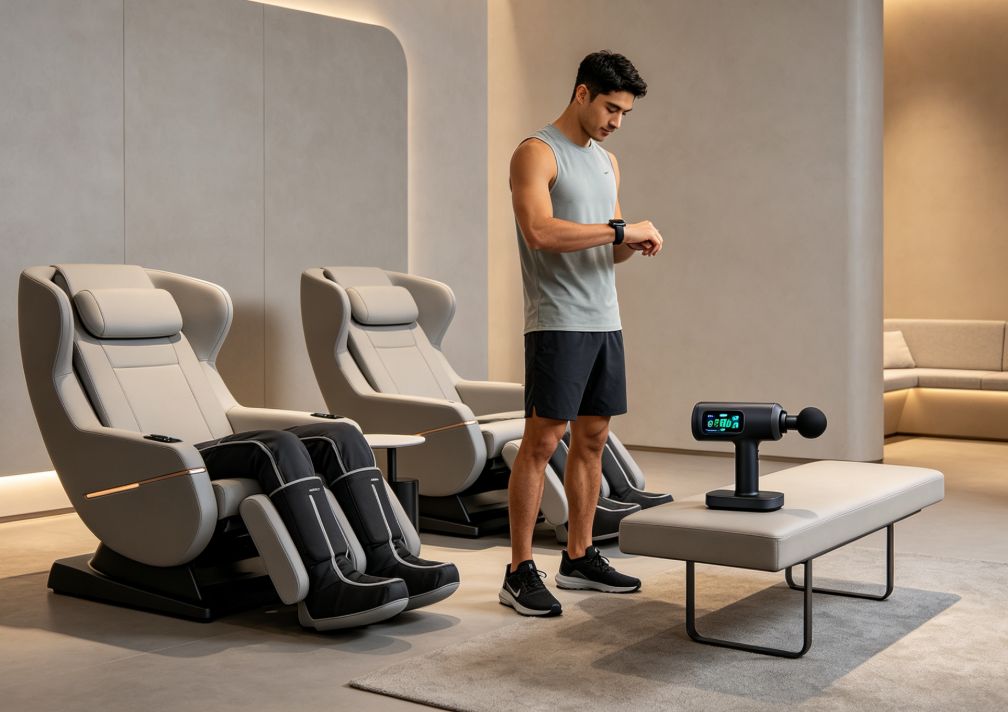
Recovery has become one of the most frequently covered topics in fitness and health journalism over the past two years. Wearable devices that track heart rate variability, sleep quality, and training load now appear in coverage alongside cryotherapy chambers, compression sleeves, and infrared saunas. Reporters are treating rest and repair as newsworthy subjects in their own right, not just as an afterthought to workout routines.
Part of this shift comes from how quickly the underlying industry has grown. Hotels, gyms, and clinics are adding wellness equipment to their facilities at a pace that outlets covering hospitality and consumer trends have found hard to ignore. What used to be a niche offering for elite athletes is now marketed to hotel guests, gym members, and office workers, and that expansion into everyday life is exactly the kind of story business and lifestyle desks like to track.
Recent trends driving media coverage of recovery and wellness technologies
Several forces are converging at once. Wearable adoption has moved past simple step counting. Devices from major consumer tech brands now estimate readiness, recovery scores, and sleep stages, giving people daily data they previously only got from a lab. Gold’s Gym notes that smartwatches, rings, and AI-driven sensors are increasingly used to measure heart rate variability and recovery, feeding into training decisions that used to rely on guesswork.
At the same time, equipment that was once confined to professional training rooms has entered commercial gyms and hotel spas. Reporting from Forbes describes how compression boots, infrared light panels, and cryotherapy devices have become common sights even in modest gym chains, not just luxury clubs. That visibility naturally invites press attention, since journalists tend to cover technology once it reaches a mainstream audience rather than while it remains a specialty tool.
Industries adopting evidence-informed recovery practices
Sports medicine remains the anchor for most reporting, but the practices have spread well beyond athletics. Physical therapists and orthopedic clinics use pneumatic compression and cold therapy as part of standard post-surgical protocols, a use case documented in market analysis from IndexBox, which points to hospitals and ambulatory surgical centers adopting programmable recovery systems to reduce reliance on opioid-based pain management.
Hospitality is following a similar path. Luxury properties have added cryotherapy and hyperbaric oxygen chambers to their spa menus, according to research from the Global Wellness Institute, which tracks these additions as part of broader shifts in guest expectations. Corporate wellness programs are also part of the picture. Some employers now offer on-site recovery sessions as part of efforts to reduce stress and support employee health, a trend the Institute has also documented in its annual reporting.
How journalists distinguish research findings from product announcements
One challenge for reporters covering this space is separating clinical evidence from marketing claims. A company announcing a new device is not the same as a peer-reviewed study demonstrating that the device works, and experienced health journalists are generally careful to flag that difference. Claims about inflammation reduction, muscle recovery speed, or performance gains carry more weight when they cite a specific study, a named researcher, or an institution such as a university sports medicine department.
Physical therapist Jessica Yeaton of UCHealth SportsMed Clinic, quoted in coverage from Sports Medicine Weekly, frames recovery as central to both performance and long-term health rather than a shortcut. That kind of attributed, expert-based commentary is typical of how outlets try to ground product-driven stories in something more substantive than a press release. Readers benefit when an article distinguishes between a manufacturer’s internal testing and independent research published in a journal or presented at a medical conference.
Where wellness equipment fits into broader reporting on sports performance, healthcare, hospitality, and consumer wellness
Recovery technology sits at an intersection of several beats that don’t always overlap. Sports reporters cover it through the lens of athlete performance and injury prevention. Health reporters focus on clinical applications, such as pain management protocols used in hospitals. Business and travel writers track it as a hospitality amenity, since hotel chains increasingly compete on wellness offerings the way they once competed on room size or pool access. Consumer technology reporters, meanwhile, cover the wearables and at-home devices that let ordinary people apply some of the same principles without visiting a clinic or spa.
This is why a single story about recovery gear might appear in a fitness magazine, a hospitality trade publication, and a consumer tech roundup within the same month. Athletech News reports that companies like Hyperice have expanded distribution into professional sports teams, university athletic programs, and hotel chains including Marriott, Hilton, and Hyatt properties, illustrating how one product category can cross multiple industries at once. Audio formats have joined this mix as well, with health and wellness experts increasingly showing up in interview-style shows, part of a broader rise in podcast journalism as a venue for explaining emerging research to a general audience.
What readers should evaluate when interpreting news about emerging recovery technologies
Readers encountering these stories can ask a few practical questions. Is the claim tied to a specific study, or is it a general statement about how a device is supposed to work? Is the expert quoted independent of the company selling the product, or are they a paid spokesperson? Has the technology been used in clinical settings for years, like cryotherapy and compression therapy, or is it a newer entrant without much independent research yet?
It also helps to remember that market size and media attention are not proof of effectiveness. A product category can grow quickly because it is genuinely useful, because it is well marketed, or some combination of both. Comparing coverage across outlets, checking whether cited research appears in a recognized journal, and noting whether an article discloses financial ties to the companies involved are all reasonable steps before treating a recovery trend as settled science.
As wearable data, clinical protocols, and hospitality amenities continue to converge, recovery is likely to remain a recurring subject across health, business, and lifestyle journalism. The technology itself may keep evolving, but the underlying task for readers stays the same: separating solid evidence from enthusiastic promotion.