

Pew Research Center reports that many people now consume news through digital platforms, mobile devices, and social media feeds rather than relying on traditional television broadcasts alone. That shift has quietly changed more than viewing habits. It has changed the spaces where news itself happens.
Press conferences once took place in plain rooms with a microphone, a table, and little attention paid to surroundings. Today, visual settings are receiving greater attention because audiences absorb much more than words. Sources discussing event backdrop printing NYC show how media environments increasingly include branded press walls, staged interview spaces, and visual structures designed to shape audience experience. What was once a simple background is becoming an active part of communication.
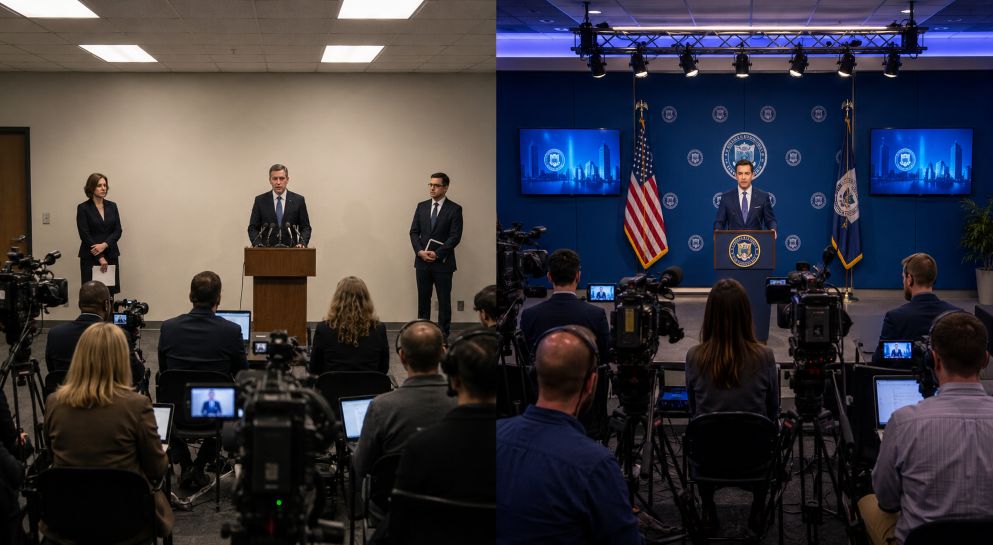
News Spaces Are Becoming Part of the Message
Traditional reporting focused heavily on spoken content. A statement was expected to stand on its own. However, media consumption has evolved. People watching a public announcement today often notice details beyond the speaker. They see colors behind the podium, the placement of logos, the lighting, the room arrangement, and even the people standing nearby.
Research published by Harvard Business Review has explored how visual information strongly affects perception and decision-making. Human beings tend to process visual signals quickly, often forming impressions before they fully evaluate spoken information. Small details can influence how a message feels, even if viewers do not consciously recognize those details.
Because of this, communication teams increasingly think beyond speech writing. They think about setting. They think about camera angles and visual consistency. Every object visible within a frame can become part of the audience’s interpretation.
The Rise of Purposefully Designed Media Environments
Modern news environments often look carefully planned because they usually are. Government agencies, businesses, universities, and organizations understand that media coverage frequently extends beyond live broadcasts.
News content now moves through many channels:
- Short video clips
- Livestreams
- Social media posts
- Screenshots
- Mobile news applications
- Online articles
Unlike older television formats where viewers watched complete segments, many people now encounter isolated moments. A single frame from a press conference may circulate online long after the event ends. That reality changes planning decisions. Background visuals are no longer temporary elements seen for a few minutes. They can become lasting images connected to a public event.
Political campaigns provide one example. Campaign teams often place supporters, banners, and recognizable visual symbols around speakers. Corporate announcements frequently use consistent colors and logo placement. Educational institutions create staged environments that communicate identity and credibility.
Even interview settings have changed. Bookshelves, city skylines, studio environments, and carefully designed office spaces appear regularly because they provide context. The room itself begins telling part of the story.
Does Visual Design Create Distraction?
Despite these developments, some observers raise important concerns. A stronger focus on visual presentation can create questions about balance. Critics sometimes argue that highly designed environments risk shifting attention away from substance. Instead of discussing the message itself, public conversation can move toward visual details.
Social media offers many examples of this behavior. Discussions following public events occasionally focus on stage design, clothing choices, background images, or audience arrangement rather than the content of the announcement.
Pew Research Center research on media behavior suggests that audiences increasingly engage with visual elements during news consumption. This does not automatically reduce attention to substance, but it can alter what captures interest first. Visual presentation therefore creates a delicate balance. A thoughtfully designed setting may provide context and clarity. Excessive design, however, can create distraction.
Why Plain Backgrounds No Longer Meet Modern Expectations
Simple backgrounds once served a practical purpose because media distribution followed predictable patterns. Television viewers watched scheduled broadcasts, and audiences generally consumed information within a complete program. Current media habits look very different.
Short-form video platforms encourage brief viewing sessions. Social media users often encounter a clip without seeing the full event. News content appears among entertainment, personal posts, and advertising. Discussions around how digital platforms continue changing media consumption habits also reflect this shift, showing how audiences increasingly experience information through fragmented content rather than complete broadcasts.
These changing conditions create competition for attention. Visual context helps audiences quickly understand what they are seeing. For example, emergency announcements often use recognizable government symbols. Health organizations may use consistent visual branding during public briefings. Businesses introducing products frequently rely on coordinated stage designs and branded display walls.
Large events increasingly use media walls, visual panels, and custom display settings because visual consistency supports recognition across different channels. Instead of functioning as decoration, these elements become communication tools.
Visual Design and Communication Are Becoming Connected
The conversation does not need to become a choice between presentation and substance. Strong communication often depends on both. A message still carries the greatest importance, but context can help audiences understand that message more clearly.
Visual environments may support organization, professionalism, and familiarity. They can help viewers identify who is speaking and understand the setting around them. Press walls, branded media setups, interview stages, and display systems increasingly overlap with traditional news spaces because public communication itself is changing. Future developments may continue this trend. Virtual environments, interactive media stages, and digital production tools are already influencing how events appear on screen.
Audiences once watched people deliver information against simple walls. Today they often watch carefully built environments designed to communicate ideas beyond words. The message still matters most. Yet the visual setting around it increasingly matters too.
As media habits continue evolving, customized media backgrounds, branded display systems, and staged visual environments may become familiar parts of how audiences experience public communication. What once sat quietly behind speakers now plays a more visible role in how stories are understood and remembered.